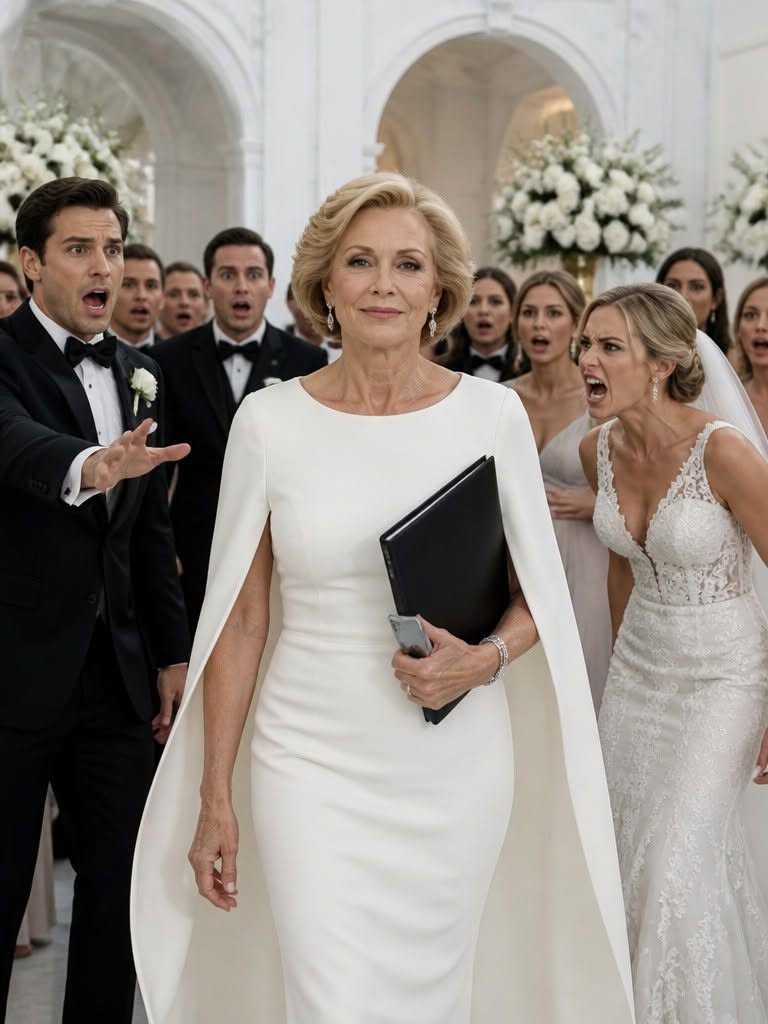
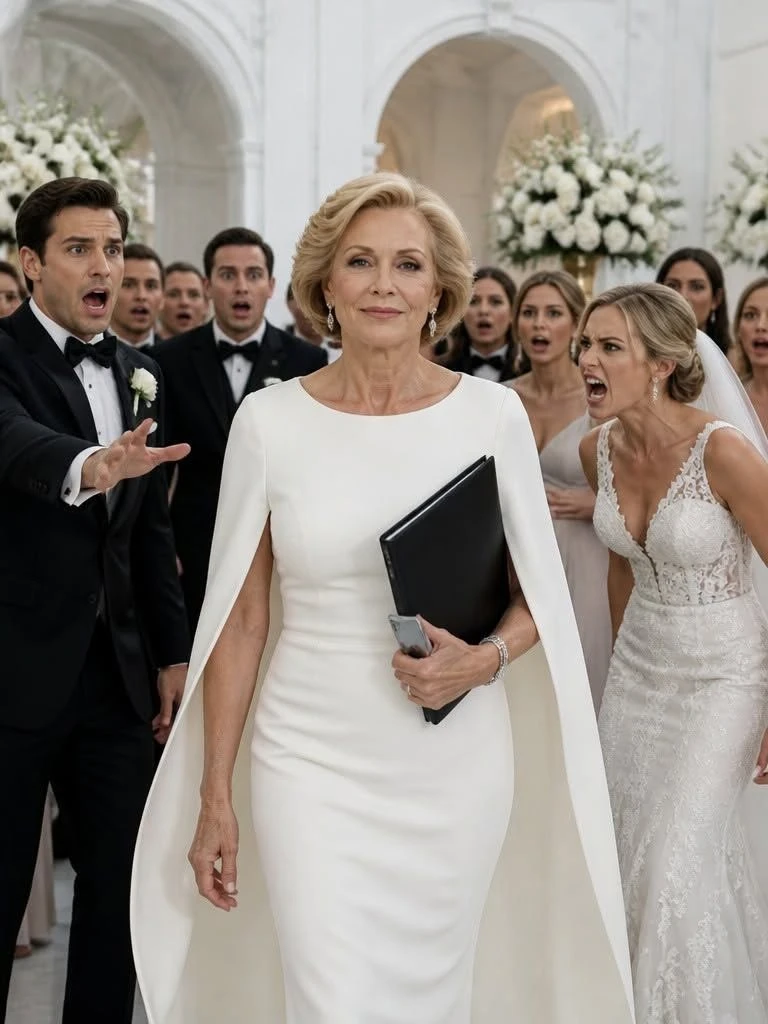
I Raised Him From the Day Everyone Else Walked Away, but at His Wedding He Pretended I Was Nobody.
By Midnight, the Life He Thought He Had Built Without Me Began to Disappear.
The first thing my son said when he saw me outside his wedding was not Mom.
It was:
“What are you doing here?”
For several seconds, I thought the music from the courtyard had swallowed part of the sentence.
Maybe he had said, What are you doing out here?
Maybe he was angry because someone had mistakenly stopped me at the gate.
Maybe he was about to put an arm around me, glare at the young woman holding the guest tablet, and say, Of course she’s invited. She’s my mother.
A mother can invent a thousand merciful explanations in the space between one heartbeat and the next.
I invented all of them.
Then Ivan looked at the blue dress I had saved two years to buy, looked at my sensible beige shoes, looked at the small purse hanging from my wrist, and sighed as though I had arrived carrying a bucket and mop.
Behind him, a photographer was waiting.
So was his bride.
Brenda Caldwell stood beneath an arch of white roses in a fitted ivory rehearsal gown, her blond hair swept into a smooth knot, diamonds glittering at her ears.
Ivan glanced over his shoulder at the guests.
Then back at me.
“I came to your wedding,” I said.
My voice sounded smaller than I intended.
“The woman at the entrance says my name isn’t on the list.”
His jaw tightened.
Then he did something I will remember until I die.
He rolled his eyes.
“Did you seriously think you were invited?”
The words entered me slowly.
Not like a knife.
Knives are quick.
This was colder.
Like standing barefoot in winter water and realizing the numbness has only just begun.
I stared at the man in front of me and tried to find the three-year-old boy who had once wrapped both arms around my neck and refused to let go.
He was nowhere in Ivan’s face.
Not then.
Behind him, the estate looked like something from a magazine.
White roses climbed stone columns.
Crystal lights hung between olive trees.
A quartet played near a fountain.
Waiters in black jackets carried champagne beneath strings of golden bulbs.
Beyond the garden, vineyards rolled into the Napa hills in perfect green rows beneath the late-afternoon sun.
Everything was elegant.
Everything was expensive.
Everything was exactly the life Ivan had spent the last five years trying to convince people he had created alone.
I touched the purse at my side.
Inside was a letter.
Eight handwritten pages.
I had started it three weeks earlier.
I had rewritten it six times.
The first line said:
My dearest Ivan, there was one day in my life when I became richer than I ever imagined possible, and it was the day a frightened three-year-old boy asked me not to leave him.
I had planned to give it to him before the ceremony.
Now I wished I had left it at home.
Brenda stepped closer.
“Oh,” she said.
Not hello.
Not Evelyn.
Just oh.
Then came the smile.
Brenda had a particular smile when she wanted to hurt someone without giving witnesses anything ugly to repeat.
It barely touched her mouth.
“We thought this had already been explained.”
“Explained?”
She glanced toward the reception area.
“We wanted a very cohesive atmosphere.”
I looked at her.
“I don’t understand.”
Her smile sharpened.
“An elegant wedding.”
She waited.
Then added softly:
“With people who fit the image.”
I finally understood.
My old Toyota.
My little two-bedroom house in Sacramento.
The coupons I clipped.
The accent I had never entirely lost after arriving in California from New Mexico as a teenager.
The Christmas sweaters Ivan used to love until Brenda laughed at one.
The casserole dish I brought to their engagement party because no one had told me the dinner was catered by a chef from San Francisco.
My hands, rough from decades of work.
My hair, which I colored myself over the bathroom sink.
Apparently all of it had become embarrassing.
Apparently I had become embarrassing.
Ivan shoved one hand into the pocket of his tuxedo.
“Mom, please don’t make this into a scene.”
Mom.
At least I had earned one word.
I stared at him.
“I’m not making a scene.”
“Good.”
“I’m asking why the woman who raised you wasn’t invited to your wedding.”
His expression hardened.
Brenda crossed her arms.
Ivan lowered his voice.
“Because this is important to me.”
Something inside me went very still.
I said, “And I’m not?”
“That’s not what I said.”
“You didn’t have to.”
His eyes flicked toward the photographer again.
The irritation on his face increased.
I suddenly realized he was worried someone might photograph us together.
I had spent months wondering why he never asked me what I was wearing.
Why he changed the subject whenever I mentioned wedding arrangements.
Why I never received an invitation but convinced myself that immediate family didn’t need formal invitations.
I had excused everything.
Because mothers are dangerous when we become experts at explaining away the ways our children hurt us.
I looked down at the blue dress.
It was not designer.
It had cost $289.
To Brenda, that probably qualified as cheap.
To me, it had meant twenty-four months of placing ten dollars here, fifteen dollars there into an envelope marked IVAN’S WEDDING.
I had altered the hem myself.
I had polished the shoes.
That morning, I had stood in front of my bedroom mirror and wondered whether Ivan would think I looked nice.
At sixty-four, I should have known better than to need my son’s approval.
But some parts of motherhood do not grow old with the rest of us.
Behind Ivan, someone called his name.
He looked relieved.
“Look, I need to go.”
He started to turn.
I said, “Ivan.”
He stopped.
“Did you know?”
“Know what?”
“That they were going to turn me away at the gate.”
His silence answered first.
Then he said:
“Yes.”
One word.
That was the moment something broke.
Not my heart.
That had survived too much to break cleanly.
Something else.
The obligation I had mistaken for love.
I nodded.
Ivan seemed unsettled by my calmness.
Maybe he expected tears.
Maybe anger.
Maybe a scene dramatic enough to justify everything Brenda had probably told him about me.
Instead, I opened my purse.
His eyes dropped toward it.
For one foolish second, I almost gave him the letter.
Then I closed the purse again.
“I hope the ceremony is beautiful,” I said.
He frowned.
“Mom—”
“And I hope someday you become the man I thought I raised.”
I turned around.
Brenda said something behind me.
I did not hear it.
Or perhaps I simply stopped listening.
I walked past the woman with the tablet.
Past two white columns covered in roses.
Past a valet who had watched the entire exchange while pretending not to.
Across the gravel drive.
My hands were steady until I reached my car.
Then I sat behind the steering wheel and could not remember how to breathe.
I met Ivan twenty-nine years earlier in a county foster services office in Sacramento.
I had gone there because I was supposed to sign paperwork for a temporary placement.
Temporary.
That was the word.
I had completed six months of foster-parent training after my divorce, thinking I might help one child for a weekend or a month.
I was thirty-five.
My marriage had ended because my husband, Dennis, wanted children and I had learned after years of treatments that I would probably never carry one.
There was no dramatic betrayal.
No screaming.
Just sadness slowly turning two people into strangers.
Six months after the divorce was final, Dennis remarried.
A year later, his wife was pregnant.
I found out from a Christmas card.
For several weeks I carried that card around in my purse like proof that God had made a clerical error.
Then one evening, I saw a television story about children sleeping in county offices because there were not enough emergency foster homes.
I called the number on the screen the next morning.
That decision led me to Ivan.
He was sitting beneath a plastic table when I first saw him.
Not at it.
Under it.
He wore red sneakers two sizes too large, jeans with one knee ripped open, and a yellow shirt with a faded dinosaur across the front.
A social worker named Diane crouched nearby.
“Ivan,” she said gently, “this is Evelyn.”
He did not move.
I lowered myself onto the floor.
My knees protested even at thirty-five.
“Hello.”
No answer.
“I like your dinosaur.”
He peeked at me.
“It bites.”
“Good. I’m afraid of dinosaurs that don’t bite.”
That made absolutely no sense, but he considered it seriously.
Then he crawled halfway out.
He had huge brown eyes.
A bruise yellowing near his chin.
Hair someone had cut unevenly.
He stared at me for nearly a minute.
Then he asked the question that changed my life.
“Are you going to leave me too?”
Diane closed her eyes.
I later learned Ivan’s biological mother had disappeared for three days, returned, promised she would never leave again, and vanished permanently two months later.
He had been moved through four temporary homes in less than a year.
I did not promise him anything that afternoon.
I had been trained not to.
I said, “I’m taking you home tonight. Tomorrow morning, when you wake up, I’ll still be there.”
He stared at me.
“After breakfast?”
“After breakfast.”
“After lunch?”
“Yes.”
“After dark?”
“Yes.”
He finally crawled out.
That night, I made macaroni and cheese because Diane said he liked it.
He ate three bites.
Then he carried his plate into my bedroom and sat on the floor while I folded laundry.
“What are you doing?” I asked.
“Watching.”
“For what?”
“To see if you leave.”
I slept with my bedroom door open for seven months.
The adoption took three years.
On the day the judge declared Ivan legally my son, he was six years old.
He wore a clip-on tie.
I wore the only suit I owned.
Outside the courthouse he asked, “Can they ever take me back?”
“No.”
“What if I’m bad?”
“No.”
“What if I break something?”
“No.”
“What if I get really bad grades?”
“Ivan.”
He looked terrified.
I took his face between my hands.
“You are my son. There is no return policy.”
He laughed.
Then he cried.
Then I cried.
We ate pancakes for dinner.
For years afterward, every adoption anniversary was Pancake Night.
Even when he became a teenager.
Even at seventeen, when he pretended it was ridiculous while eating five.
I had thought some traditions were permanent.
I was wrong.
By the time I drove away from the Napa estate, the wedding ceremony had probably begun.
My phone buzzed twice.
I hoped, absurdly, it was Ivan.
It was my neighbor, Ruth.
How does my favorite mother of the groom look? SEND PHOTOS!
I pulled over beside a vineyard.
For a moment, I considered lying.
Beautiful ceremony.
Everything is wonderful.
Ivan looks so handsome.
Then I started laughing.
It came out wrong.
Half laugh.
Half sob.
I pressed both hands over my mouth until it stopped.
On the passenger seat sat the gift box I had planned to give Ivan and Brenda at the reception.
Inside were two things.
A framed photograph from Ivan’s adoption day.
And a cashier’s check for $150,000.
It was supposed to be their wedding gift.
Enough, Ivan had said months earlier, to help them “finally get ahead.”
He did not know the amount.
He only knew I had promised something “meaningful.”
That check represented part of the proceeds from a company I had sold three years before.
Ivan believed I had spent my life as a bookkeeper.
That was true.
It just wasn’t the entire truth.
At forty-two, I had started doing payroll for three small landscaping companies from my kitchen table.
Then five.
Then twelve.
Then a dental office.
Then restaurants.
By fifty-five, my little payroll operation employed eleven people and handled accounts for businesses across Northern California.
I never moved into a fancy office.
I never bought a luxury car.
I never stopped clipping coupons.
I understood numbers too well to be impressed by things that depreciated.
When a regional accounting group bought my company, I quietly became wealthier than anyone in my neighborhood suspected.
Including my son.
I had intended it that way.
I wanted Ivan to build his own life.
But wanting him independent and actually allowing him independence had become two very different things.
When his first software company failed, I covered the $46,000 he owed vendors.
When he launched another business, I supplied the seed capital through a company called Hartwell Holdings.
He believed Hartwell was a private investment firm recommended by my old boss.
It was mine.
When he and Brenda wanted a condo in San Francisco they could not afford, I bought it through an LLC and arranged what looked like a favorable private mortgage.
The LLC was mine.
When his bank refused a business line because his company had inconsistent revenue, Hartwell Holdings pledged collateral behind the loan.
Again, mine.
His health insurance during the first two years of his company?
Paid indirectly through one of my entities.
His office lease deposit?
Mine.
The emergency payroll reserve he had bragged about creating himself?
Partially funded by a trust account I established when he turned twenty-five.
Ivan knew I had helped.
He did not know how much.
That had been my mistake.
I had spent his entire life placing invisible cushions beneath him.
Whenever he fell, I made sure the ground hurt less.
Then I watched him stand up and congratulate himself for being strong.
Sitting beside that vineyard, I finally understood what I had done.
I had loved my son so fiercely that I had denied him the consequences required to become a decent man.
My phone lay in my lap.
I made the first call.
“Daniel?”
My attorney answered on the fourth ring.
“Evelyn? Shouldn’t you be at the wedding?”
“I was.”
Silence.
Daniel Chen had handled my business affairs for eighteen years.
“What happened?”
“I need you to cancel the distribution.”
“What distribution?”
“The wedding transfer. The one from my revocable trust.”
Another silence.
“Evelyn, that’s three hundred thousand dollars.”
“I know.”
“You told me to initiate it Monday.”
“Has it cleared?”
“No. It’s scheduled for tomorrow morning because of the weekend.”
“Cancel it.”
“All right.”
“And Daniel?”
“Yes?”
“I need Ivan removed as successor trustee.”
His voice changed.
“Are you sure?”
“Yes.”
“May I ask why?”
“He just told me I didn’t fit the image at his wedding.”
Daniel exhaled slowly.
“I see.”
“No, you don’t. But you will.”
I hung up.
The second call was to Maria Soto, who managed Hartwell Holdings.
“Maria, I need a formal notice prepared.”
“Of what?”
“We’re ending discretionary support for Northstar Analytics.”
Ivan’s company.
She paused.
“Completely?”
“Anything we are legally obligated to honor, we honor. Not one dollar beyond that.”
“The bank renewal comes up next month.”
“Then we do not renew our collateral pledge.”
“That could reduce his credit line substantially.”
“I know.”
“Evelyn…”
My fingers tightened around the phone.
“Please don’t talk me out of this.”
“I wasn’t going to.”
The tenderness in her voice nearly broke me.
I swallowed.
“There’s one more thing. The condo.”
“What about it?”
“Start preparing notice that the below-market purchase option expires as provided in the agreement.”
“That option expires in eleven days.”
“Yes.”
“If he can’t exercise it, he either signs a market lease or moves.”
“Yes.”
Maria was quiet.
Then she asked, “Did he hurt you?”
I looked through the windshield toward hills glowing gold in the evening sun.
“Yes.”
“I’ll handle it.”
The third call was the hardest.
It was to Thomas Avery, the trustee of a separate fund I had created ten years earlier.
A fund Ivan knew nothing about.
Its balance had grown to a little more than $4.8 million.
It was meant to become his when I died.
“Tom,” I said, “I want to amend the beneficiary instructions.”
That time, the silence was longer.
“Is this about Ivan?”
“Yes.”
“Do you want him removed entirely?”
I closed my eyes.
I remembered macaroni and cheese.
Red sneakers.
Pancake Night.
A six-year-old asking if being bad could make me send him back.
“No,” I whispered.
Then I opened my eyes.
“I want the terms changed.”
“How?”
“He gets nothing automatically.”
“All right.”
“Create conditions.”
“What kind?”
“He must be financially independent for five consecutive years.”
Tom began typing.
“He cannot receive distributions if I am paying his debts, guaranteeing his obligations, or providing housing.”
“Understood.”
“And add charitable remainder provisions.”
“To whom?”
I looked at the framed adoption photo in the gift box.
“Children aging out of foster care.”
Tom stopped typing.
“All of it?”
“If Ivan does not qualify by fifty.”
“That’s a significant change.”
“I know.”
“Anything else?”
“Yes.”
I took a breath.
“Send me the complete trust activity for the last twelve months.”
“Of course.”
“Including access attempts.”
There was a pause I noticed but did not understand.
“Evelyn.”
“Yes?”
“I was planning to call you Monday.”
Something in his tone tightened the muscles in my shoulders.
“Why?”
“I don’t want to discuss it while you’re driving.”
“I’m parked.”
Another pause.
“We received a beneficiary amendment request eleven days ago.”
My hand froze around the phone.
“What?”
“It appeared to come from you.”
“I didn’t send anything.”
“I know.”
My mouth went dry.
“How do you know?”
“Because whoever sent it used a superseded version of your signature page.”
“What did it request?”
Thomas hesitated.
Then said:
“It requested that, upon your death, the entire trust pass directly to Ivan’s spouse.”
I stopped breathing.
“Brenda?”
“The document didn’t name her. It said ‘lawful spouse of Ivan Morris at the time of settlor’s death.’”
The vineyard outside my windshield blurred.
“Who submitted it?”
“An attorney’s office in San Francisco.”
“Whose?”
“I’d rather verify before I say more.”
“Tom.”
“It was sent by Caldwell, Bishop & Reed.”
Caldwell.
Brenda’s father was Martin Caldwell.
Managing partner.
I stared down the road.
The wedding music was still faintly audible behind me.
“Did Ivan know?”
“We don’t know.”
I looked back toward the estate.
The golden lights in the trees were beginning to glow.
A wedding was taking place behind those walls.
And suddenly the insult at the gate no longer looked like the entire story.
It looked like the edge of something much uglier.
“Do not contact Ivan,” I said.
“Evelyn—”
“Not yet.”
“What are you going to do?”
I started the car.
“Go home.”
At 9:17 that night, while Ivan and Brenda danced beneath a chandelier imported from Italy, I sat at my kitchen table eating canned tomato soup.
I know the exact time because Ruth knocked on my door at 9:18.
She took one look at me and said, “Who died?”
“No one.”
“Then why are you wearing a wedding dress and eating soup?”
“It’s not a wedding dress.”
“To me, anything with satin is a wedding dress.”
She came inside without being invited.
Ruth had lived next door for seventeen years.
She was seventy, widowed, opinionated, and constitutionally incapable of allowing misery to occur privately.
I told her what happened.
Not everything.
Just the gate.
Ivan.
Brenda.
The words fit the image.
Ruth listened without interrupting.
That frightened me.
When I finished, she took my soup, poured it down the sink, and opened my freezer.
“What are you doing?”
“People abandoned at weddings require ice cream.”
“I wasn’t abandoned.”
She turned around.
“You were rejected by a child you raised. Don’t edit the wound to make it easier for the person who caused it.”
I looked away.
Ruth set a carton of vanilla on the table.
“Did you call him?”
“No.”
“Good.”
“I made other calls.”
Her eyebrows rose.
I told her about the support.
Her spoon stopped halfway to her mouth.
“You own his condo?”
“Technically an LLC owns it.”
“And you own the LLC.”
“Yes.”
“And his company—”
“I don’t own all of it.”
“How much?”
“Thirty-eight percent.”
Ruth stared at me.
“He thinks Hartwell Holdings is some investment group.”
“It is.”
“You are Hartwell Holdings.”
“Mostly.”
She put the spoon down.
“Evelyn.”
“What?”
“You have been running a secret financial witness-protection program for your own son.”
Despite myself, I laughed.
Then the laugh disappeared.
“I thought I was helping.”
“You were.”
“Maybe too much.”
“Definitely too much.”
My phone rang.
Ivan.
For a second, my entire body reacted before my mind did.
I reached for it.
Ruth slapped my hand.
“Ow.”
“Why is he calling now?”
“I don’t know.”
“At nine-thirty on his wedding night?”
I stared at the screen.
Ivan calling.
Ivan calling.
Ivan calling.
Then voicemail.
A message appeared less than a minute later.
Mom, what did you do?
Not Where are you?
Not I’m sorry.
What did you do?
Ruth read my face.
“He knows?”
“Apparently.”
“How?”
I opened another message.
The transfer didn’t go through. Call me now.
The $300,000.
That was fast.
I placed the phone facedown.
Ruth nodded approvingly.
“I like this version of you.”
“I don’t.”
“That’s because she has boundaries.”
“I feel sick.”
“You’ve mistaken guilt for wrongdoing before.”
My phone rang again.
This time Brenda.
I almost laughed.
She had never called me directly in three years.
I let that go to voicemail too.
Then another call arrived.
Unknown number.
I ignored it.
A voicemail notification appeared.
I pressed play.
A man’s voice filled the kitchen.
“Mrs. Morris, this is Martin Caldwell. I believe there may be some misunderstanding regarding a scheduled financial gift to Ivan and Brenda. Given the commitments made in reliance on that transfer, I strongly suggest you return my call tonight.”
Ruth’s eyes widened.
“Strongly suggest?”
I replayed it.
Something in his tone made my skin crawl.
Not because it was threatening.
Because it was confident.
He sounded like a man accustomed to other people obeying.
I remembered Thomas’s words.
Beneficiary amendment request.
Entire trust.
Lawful spouse.
I called Daniel.
He answered immediately.
“Tell me you’re not asleep.”
“I’m not.”
“I need you to investigate Caldwell, Bishop & Reed.”
“I already started.”
Of course he had.
“What have you found?”
“Martin Caldwell handles private wealth, estate planning, and family-office structures.”
“I know that.”
“There’s more.”
“What?”
“He represented the lender on Northstar’s most recent expansion facility.”
My stomach tightened.
“Ivan never told me that.”
“Apparently Caldwell introduced him.”
I closed my eyes.
“So Brenda’s father arranged the loan secured by my collateral.”
“Yes.”
“Does Martin know Hartwell is mine?”
“I’m trying to determine that.”
Before I could answer, my phone beeped with another call.
Ivan.
I declined it.
Daniel continued.
“There’s something else. I reviewed the trust amendment request Thomas forwarded.”
“And?”
“The notary seal appears legitimate.”
“That’s impossible.”
“Your signature is forged. The notary may not know that.”
“Who is the notary?”
“A woman named Elise Benton.”
The name meant nothing.
“I’ll talk to her Monday.”
“Do not.”
“Why?”
“Because she works for Caldwell, Bishop & Reed.”
I stood slowly.
Ruth watched me.
“Daniel, are you telling me Brenda’s father tried to redirect nearly five million dollars from my son to my son’s spouse using a forged document?”
“I’m telling you someone at his firm submitted the document.”
“Same thing.”
“Legally, no.”
Emotionally, yes.
I looked toward the framed photographs on my living room wall.
Ivan at eight, missing two front teeth.
Ivan at twelve holding a soccer trophy.
Ivan at eighteen in his graduation gown.
Ivan at twenty-two after college.
Ivan at twenty-six, standing in the tiny first office of Northstar Analytics, his arm around me.
He had posted that photo once.
Caption:
Couldn’t have done it without this woman.
He deleted it two years later.
Brenda had said the office looked cheap.
“Daniel,” I whispered, “find out whether Ivan signed anything.”
“I will.”
My phone rang again.
This time I answered.
“Hello?”
“Mom.”
Ivan sounded breathless.
Music thundered somewhere behind him.
“What did you do?”
His first question.
Again.
I said, “Congratulations on getting married.”
“Mom, stop.”
“Did the ceremony go well?”
“Why did you cancel the money?”
“Because it was a gift.”
“So?”
“A gift I no longer wanted to give.”
“You promised.”
“I promised my son and his wife a wedding gift. Then my son informed me I was not welcome at his wedding.”
He lowered his voice.
“You embarrassed me.”
I almost admired the absurdity.
“I embarrassed you?”
“You showed up when Brenda specifically told you—”
“Brenda never told me not to come.”
Silence.
That mattered.
“Did you tell her she had?”
Another silence.
My chest tightened.
“Ivan.”
He muttered, “I thought she handled it.”
“You thought she handled telling your mother she wasn’t invited.”
“It wasn’t like that.”
“It was exactly like that.”
“This wedding matters to her family.”
“And I don’t?”
“Why do you keep turning everything into this?”
I gripped the counter.
“Because I spent twenty-nine years turning everything away from this.”
“What does that even mean?”
“It means every time you disappointed me, I found an excuse. Every time you used me, I called it helping. Every time Brenda insulted me, I told myself you were caught in the middle.”
“She doesn’t insult you.”
“She called my home depressing.”
“She was joking.”
“She told your friends my enchiladas smelled like a gas station bathroom.”
“That was years ago.”
“You laughed.”
He went quiet.
That memory hurt him.
Good.
Some pain is information.
Then he said, “Look, we can talk about this tomorrow. But I need you to fix the transfer tonight.”
“No.”
“Mom.”
“No.”
His voice sharpened.
“You don’t understand. We made commitments based on that money.”
“What commitments?”
“That’s private.”
“Then solve them privately.”
He inhaled.
“You’re being vindictive.”
Perhaps I was.
I considered that carefully.
Then said, “Maybe. But I’m not taking anything that belongs to you.”
“What about my credit line? Maria emailed me.”
“That guarantee belongs to Hartwell.”
“Why would Hartwell pull support because you’re angry?”
There it was.
The lie I had built was becoming impossible to maintain.
I looked at Ruth.
She nodded once.
Tell him.
So I did.
“Because Hartwell belongs to me.”
Nothing.
The music behind Ivan continued.
Then it seemed to move farther away.
“What?”
“Hartwell Holdings.”
“You know Maria?”
“Yes.”
“How?”
“I hired her.”
“No.”
“Yes.”
“Mom, that’s not funny.”
“I’m not joking.”
He sounded suddenly sober.
“Hartwell invested in Northstar.”
“I know.”
“They put in eight hundred thousand dollars.”
“I know.”
“They backed our expansion loan.”
“I know.”
A long silence.
Then:
“Why?”
The question was so painfully childish that for one instant I saw the boy under the table again.
“Because you were my son.”
“Were?”
I regretted the word.
But not enough to take it back immediately.
“Ivan, I have loved you every day since you were three. I love you tonight too. But love is not the same thing as financing your contempt.”
His breathing changed.
“Are you saying you’re pulling everything?”
“I’m saying I will no longer secretly hold your life together while you publicly pretend I am beneath you.”
“Mom, please.”
That was the first please.
I nearly broke.
Then a woman’s voice appeared in the background.
Brenda.
“What is she saying?”
Ivan muffled the phone.
I heard their voices anyway.
“She owns Hartwell.”
Silence.
Then Brenda:
“What?”
Another male voice joined them.
Martin.
“Give me the phone.”
I said, “Goodnight, Ivan.”
“Mom—”
I ended the call.
Ruth slowly exhaled.
“Well.”
I sat down.
“What have I done?”
She reached across the table.
“For the first time?”
She squeezed my hand.
“You let him feel the floor.”
The next morning, my son was on my porch at 6:42.
Still wearing his tuxedo trousers.
White shirt open at the collar.
No jacket.
No Brenda.
I watched him through the curtains for almost a minute before opening the door.
He looked terrible.
Good mothers should not feel satisfaction when their children look terrible.
I did anyway.
“What happened?” I asked.
He stared at me.
“You know what happened.”
“I know what I did.”
He stepped inside without waiting.
“Brenda left.”
That surprised me.
“Left where?”
“Her parents’ suite.”
“On your wedding night?”
He laughed once without humor.
“Apparently the financial foundation of our marriage changed.”
I closed the door.
“You’re blaming me.”
“I don’t know who to blame.”
“Try the man in the mirror.”
He flinched.
Ivan walked into the kitchen.
For the first time in years, he looked out of place in my home.
He used to know every drawer.
Now he stood near the table like a guest.
I made coffee.
Neither of us spoke until I set a mug in front of him.
He looked at it.
“You still remember.”
“Two sugars.”
His mouth tightened.
“Yeah.”
“I remember everything.”
That hurt him too.
He sat down.
“Why didn’t you tell me about Hartwell?”
“Because I wanted you to believe investors believed in you.”
“That’s insane.”
“Maybe.”
“You lied.”
“Yes.”
“You let me believe I built Northstar myself.”
“No. You did build it. I just stopped it from dying three different times.”
His head snapped up.
“Three?”
I told him.
The seed funding.
The vendor debt.
The collateral.
The emergency payroll reserve.
The office lease.
His face changed with every revelation.
By the end, he looked as though I had dismantled him piece by piece.
“The condo too?”
“Yes.”
He covered his face.
“Oh my God.”
“Ivan—”
“So none of it is mine.”
“That’s not true.”
“What is?”
“Your work. Your education. Your ideas. Your ability.”
“My company is thirty-eight percent yours.”
“That still leaves sixty-two percent.”
“My apartment—”
“Condo.”
“Whatever. I don’t own it.”
“You have an option to purchase it.”
“With money I don’t have without the company.”
“That is why people should not confuse access with ownership.”
He stared at me.
“That sounds like something you rehearsed.”
“No. It sounds like something I wish I had taught you fifteen years ago.”
His eyes filled.
He looked away quickly.
“I thought you were poor.”
“I’m not.”
“Why do you live here?”
I glanced around my kitchen.
The yellow curtains.
The scarred oak table.
The refrigerator covered with magnets.
The cabinet door Ivan had cracked at fourteen after dropping a basketball inside the house.
“Because I like my home.”
“You drive a twelve-year-old Toyota.”
“It runs.”
“You use coupons.”
“They save money.”
He looked genuinely offended by my thrift.
I nearly smiled.
Then his expression changed.
“Brenda said you were jealous.”
“Of what?”
“Her family.”
I leaned back.
Ivan rubbed his forehead.
“She said you hated that they could give me access to people and opportunities you couldn’t.”
“Did you believe her?”
“At first, no.”
“And later?”
He did not answer.
I did not rescue him from the silence.
Finally, he whispered, “Sometimes.”
There are confessions that sound like apologies.
That one did not.
Not yet.
I said, “Why wasn’t I invited?”
He looked at the coffee.
“Her mother didn’t want you there.”
“And?”
“Brenda agreed.”
“And?”
He swallowed.
“I agreed.”
“Why?”
His eyes met mine.
“Because you make me feel like the version of myself I’m trying to get away from.”
That sentence nearly finished what the wedding had begun.
But I remained still.
“What version?”
“The kid with thrift-store shoes.”
I stared at him.
“We bought new shoes when we could.”
“That’s not the point.”
“What is?”
“The tiny house. The old car. Pancakes for dinner. You bringing food everywhere. You telling stories about when I was little.”
His voice cracked.
“I walk into a room with Brenda’s family and they know senators and CEOs and people with vineyards, and then you talk about how I used to hide crackers under my pillow because I was scared there wouldn’t be food in the morning.”
I felt shame on his behalf.
Not because of the story.
Because of what he thought it meant.
“You were three.”
“I know.”
“You had been hungry.”
“I know.”
“I told that story because I was proud of how far you came.”
“I heard it as you reminding everyone where I came from.”
I studied him.
For the first time, I understood that Ivan had spent years interpreting my pride as exposure.
His childhood wound had not disappeared.
It had changed clothes.
The frightened boy who worried I would leave had become a man terrified that successful people might discover he had once been unwanted.
Brenda had found that wound.
And apparently learned where to press.
Still, pain does not absolve cruelty.
“You could have told me.”
“I should have.”
“You could have asked me not to tell those stories.”
“I should have.”
“You could have bought me a different dress if mine embarrassed you.”
His face crumpled.
“That’s not—”
“You could have parked my Toyota behind the catering trucks if the sight of it offended your guests.”
“Mom.”
“You could have hidden me in the kitchen. At least I would have been inside.”
“Stop.”
“No.”
My voice rose for the first time.
“No, Ivan. You do not get to come into my house and ask me to protect you from the sound of what you did.”
He stood.
Tears were running down his face.
“I know I screwed up.”
“You humiliated me.”
“I know.”
“You looked me in the face after I spent my life making sure you never felt unwanted and told me I wasn’t wanted.”
He covered his mouth.
I was crying now too.
“Do you understand what you did?”
He nodded.
“Say it.”
His shoulders shook.
“Mom—”
“Say it.”
“I made you feel like I was ashamed of you.”
“No.”
He looked at me.
“You were ashamed of me.”
He lowered his head.
“Yes.”
That was the first true thing between us.
Then I asked a question he did not expect.
“Did you ask anyone to change my trust?”
His head jerked up.
“What trust?”
I watched him carefully.
“My estate trust.”
“What are you talking about?”
“Someone submitted a forged amendment through your father-in-law’s firm.”
Color drained from Ivan’s face.
“What amendment?”
“To give my assets to your spouse when I die.”
He stared.
“That’s not possible.”
“It happened.”
“No.”
“Ivan—”
“No.”
He pushed away from the table.
“Brenda would never—”
The front door opened.
Ruth walked in carrying bagels.
She stopped when she saw Ivan.
“Ah.”
Ivan blinked.
“Why do you have a key?”
“Because your mother trusts me.”
The sentence landed harder than Ruth intended.
Or perhaps exactly as hard as she intended.
She set the bagels down.
“I can leave.”
“No,” Ivan said suddenly.
He looked at me.
“Call your lawyer.”
“What?”
“Call him.”
“Ivan—”
“If somebody forged your name, call him.”
His fear looked real.
So I called Daniel.
Forty minutes later, he was sitting at my kitchen table with a laptop and a folder thick enough to ruin anyone’s Sunday.
He showed us the amendment request.
I recognized my name immediately.
Not my signature.
But close.
Very close.
Ivan stared at it.
Then at the witness page.
His expression changed.
“What?”
He pointed.
“That address.”
Daniel leaned closer.
“What about it?”
“That’s Brenda’s old apartment.”
My skin chilled.
The notary had listed the signing location as an apartment on Franklin Street.
Ivan stood abruptly.
“She lived there until last year.”
Daniel typed something.
“Are you sure?”
“Yes.”
He pulled out his phone, scrolled, and showed us an old photograph.
Brenda standing on a balcony.
The building number visible behind her.
Same address.
Ivan sank back into his chair.
“No.”
I watched denial fight evidence inside him.
Then Daniel said, “There’s more.”
He opened another document.
“Two weeks ago, Northstar’s lender received preliminary paperwork for a personal guarantee extension.”
Ivan frowned.
“I signed an extension.”
“Not this one.”
Daniel turned the laptop.
My name appeared beneath a guarantee for $2.2 million.
I felt the room tilt.
“I didn’t sign that.”
“We know.”
Ivan stood again.
“What the hell is this?”
“Someone was attempting to extend Hartwell’s collateral support without Evelyn’s direct authorization.”
“Who prepared it?”
Daniel looked at him.
“Caldwell, Bishop & Reed.”
Ivan grabbed his phone.
I said, “Don’t.”
“I’m calling Brenda.”
“Don’t.”
“That’s my wife.”
“Then ask yourself why your wife’s family has two documents containing my forged signature.”
He stared at me.
“This has to be some mistake.”
The doorbell rang.
All four of us froze.
Ruth muttered, “If that’s a florist, I’m keeping the flowers.”
It wasn’t.
It was Brenda.
And her father.
Brenda entered my house as though she had come to inspect damage.
She wore sunglasses, cream trousers, and a white cashmere sweater.
Martin Caldwell followed in a navy blazer.
He was tall, silver-haired, immaculate.
He had the quiet confidence of a man who had spent forty years being the most expensive person in every room.
He looked around my living room.
At the old sofa.
The family photographs.
The crocheted blanket Ruth had made me.
Something moved across his face.
Dismissal.
I recognized it immediately.
Like father, like daughter.
Brenda took off her sunglasses.
Her eyes were swollen.
“Ivan, we need to talk privately.”
Ivan did not move.
“My mother’s trust documents were forged through your father’s firm.”
Martin stepped forward.
“That is a serious allegation.”
Daniel stood.
“So is submitting forged estate documents.”
Martin recognized him.
“Daniel Chen.”
“Martin.”
They shook hands like men imagining future depositions.
Brenda looked at Ivan.
“Can we please go outside?”
“No.”
“Ivan.”
“No.”
He pointed at the trust amendment on the table.
“Did you know about this?”
She glanced down.
Only once.
Too quickly.
That was enough.
Ivan saw it.
His face went blank.
“Brenda.”
“I can explain.”
I will never forget the sound he made.
Not a word.
Just a quiet exhale.
The sound of a person watching the floor disappear beneath him.
Martin intervened.
“This conversation is becoming unnecessarily emotional.”
Ruth laughed from beside the sink.
“Sir, you came to a mother’s house the morning after your daughter threw her out of her son’s wedding, and now we’ve got forged paperwork on the table. Emotional is the appropriate setting.”
Martin ignored her.
He looked at me.
“Mrs. Morris, the estate amendment was part of exploratory planning.”
“Using my forged signature?”
“It should never have been submitted.”
“But it was.”
“An administrative error.”
Daniel said, “Notarized administrative errors are interesting.”
Martin’s eyes cooled.
I turned to Brenda.
“Did you know?”
She looked at Ivan.
Not me.
“I was trying to protect us.”
Ivan whispered, “From what?”
“From instability.”
“What instability?”
“Your mother controls everything.”
She gestured toward me.
“Look what she did last night. One tantrum and suddenly your financing disappears.”
My mouth fell open.
Brenda continued.
“We were trying to make sure your future couldn’t be manipulated by someone emotional.”
Ruth made a strangled sound.
Ivan looked sick.
“You forged her name to stop her from manipulating me?”
“I didn’t forge anything.”
“Did you know they were changing the trust?”
“I knew Dad’s office was reviewing options.”
“For money you didn’t even know existed?”
That silenced her.
Ivan turned to me.
“When did she learn about the trust?”
“I don’t know.”
Martin answered.
“We learned of it during routine financial diligence.”
Daniel’s head tilted.
“What diligence?”
No one answered.
Then Daniel’s expression sharpened.
“The prenuptial agreement.”
Ivan frowned.
“What about it?”
Daniel looked at Martin.
“You conducted asset discovery for the prenup.”
Martin said nothing.
Daniel continued.
“And somehow during that process, your office discovered a trust your client’s fiancé did not know existed.”
Brenda crossed her arms.
“Dad is thorough.”
Daniel looked at me.
“Evelyn, did you ever disclose the Avery trust to Ivan?”
“No.”
“To Northstar?”
“No.”
“To a lender?”
“No.”
“To any Caldwell entity?”
“No.”
Martin’s confidence slipped.
Just slightly.
Daniel saw it.
So did I.
“Then how,” Daniel asked, “did your firm know it existed?”
Martin’s jaw tightened.
“I am not going to discuss privileged work product.”
Ivan stared at his father-in-law.
“I waive it.”
“You can’t waive Brenda’s privilege.”
Brenda grabbed Ivan’s arm.
“This is getting ridiculous.”
He pulled away.
“Answer him.”
“Not here.”
“My mother was thrown out of our wedding because she didn’t fit your image.”
“That is not what happened.”
“I heard you say it.”
Brenda’s face changed.
I realized she had expected him to remain manageable.
The humiliation had been acceptable when I stood alone at the gate.
Now there were witnesses.
Documents.
Questions.
Ivan looked toward me.
His voice broke.
“You planned this?”
I did not know which of us he meant.
Brenda answered anyway.
“We planned a wedding.”
“You told me Mom would understand.”
“She should have.”
“You told me she’d already agreed not to attend.”
My breath caught.
Brenda went still.
Ivan continued.
“You said you called her.”
I looked at him.
“What?”
He turned to me.
“Brenda told me you agreed. She said you didn’t want to come because you felt uncomfortable around her family.”
Brenda snapped, “That’s not exactly what I said.”
“It is exactly what you said.”
I remembered the conversation at the estate.
Did you know they were going to turn me away?
Yes.
Ivan had known I wasn’t allowed inside.
But perhaps he had not known how that decision had been presented to me.
It did not absolve him.
He had still accepted my absence.
Still spoken cruelly.
Still chosen appearances.
But another crack had appeared in the story.
Martin interrupted.
“This is becoming pointless.”
“No,” I said.
Everyone turned toward me.
“For the first time, I think it’s becoming useful.”
I looked at Brenda.
“How did you know about the Avery trust?”
She said nothing.
“How?”
Martin stepped toward the door.
“This conversation is over.”
Daniel blocked him.
“Not quite.”
Martin laughed.
“You have no authority to detain me.”
“I’m not detaining you.”
Daniel lifted his phone.
“I’m informing you that at 7:31 this morning I referred the forged amendment and guarantee to the financial institution’s fraud counsel.”
Martin stopped.
The room went silent.
Daniel continued.
“They requested that no potentially involved party be alerted until records could be preserved.”
Martin’s face finally changed.
“You had no basis—”
“My client’s signature was forged twice.”
“You should be very careful what you imply.”
“I am.”
Brenda looked at her father.
“Dad?”
He said nothing.
For the first time since entering my home, he looked uncertain.
Then my son asked a question that changed everything.
“Were you ever going to let me keep my company?”
Martin stared at him.
“What kind of question is that?”
Ivan’s voice shook.
“The new credit facility. The expansion. The merger you’ve been pushing me toward.”
Brenda said, “Ivan, stop.”
He looked at her.
“You said the merger would make us secure.”
“It would.”
“Would I still control Northstar?”
She looked away.
Ivan turned to Daniel.
“Can you pull the merger documents?”
“Do you have them?”
“In my email.”
He opened his laptop.
Five minutes later, Daniel was reading.
Ten minutes later, his face had become very serious.
“What?” I asked.
He looked at Ivan.
“If this closing structure remains unchanged, Caldwell Capital acquires effective voting control after conversion.”
Ivan stared at him.
“No, they get twenty percent.”
“Economic interest, initially.”
Daniel rotated the screen.
“But if the outstanding credit facility is called, conversion provisions activate. Hartwell’s collateral would satisfy a significant portion of the debt, and Caldwell Capital receives preferred voting rights.”
Ivan went pale.
“What does that mean?”
“It means,” Daniel said carefully, “that if your mother continued guaranteeing the company and the company later triggered certain default provisions, her money could pay down the debt while Brenda’s family took control of Northstar.”
Nobody spoke.
Then Ivan looked at Brenda.
“Is that why you married me?”
She slapped him.
The sound cracked through my kitchen.
Ruth moved immediately.
I caught her arm.
Ivan did not react.
He stared at Brenda.
She began to cry.
“How dare you.”
“Answer me.”
“I loved you.”
“Answer me.”
“I loved you!”
“Did your father plan to take my company?”
Martin said, “Northstar required professional management.”
Ivan laughed.
And that was his answer.
Brenda turned on her father.
“Dad.”
He looked at her.
“Enough.”
That one word revealed more than any confession.
Ivan sank into the chair.
He had lost his wife, his imagined fortune, and the story he told himself about his success in less than twelve hours.
I should have felt victorious.
Instead, I saw a three-year-old boy under a plastic table.
And my heart betrayed me by aching for him.
The investigation lasted seven months.
The marriage lasted eleven days.
Brenda filed for annulment first.
Ivan did not contest it.
The forged documents became the subject of a criminal inquiry, though the outcome was less dramatic than people imagine these things are.
There were no agents storming a mansion at midnight.
No handcuffs beside a swimming pool.
Real consequences usually arrive through certified letters, depositions, frozen accounts, suspended licenses, and men who once answered every call suddenly discovering nobody wishes to speak with them.
Elise Benton, the notary, admitted she had notarized documents outside proper procedure after being instructed that the signatures had already been verified.
She lost her commission and cooperated.
A junior attorney at Caldwell’s firm produced emails.
Those emails led to Martin.
Martin claimed he believed the documents reflected my wishes.
The evidence disagreed.
The matter widened.
It turned out my forged signatures were not the only questionable paperwork connected to Caldwell-controlled investments.
By spring, Martin had resigned from his firm.
By summer, his professional reputation was shattered.
Brenda moved to New York.
She sent Ivan one email.
He never showed it to me.
I never asked.
But none of that was the hardest part.
The hardest part was Ivan.
Because stripping away the lies surrounding him did not magically restore the boy I loved.
For the first month after the wedding, he blamed everyone.
Brenda.
Martin.
Me.
His board.
His lender.
His therapist.
Yes, eventually there was a therapist.
Ruth threatened to drag him there personally if he refused.
Northstar lost its expansion credit.
Two investors withdrew.
The company cut forty-one positions.
Ivan had to leave the condo.
He rented a small one-bedroom apartment above a dry cleaner in Oakland.
The first time I visited, there was a mattress on the floor.
He looked embarrassed.
I looked around.
A folding table.
Two chairs.
A coffee maker.
Stacks of files.
No designer furniture.
No views of the bay.
No doorman.
He said bitterly, “Fits the image?”
I almost left.
Then I saw what he was doing.
On the table were employee severance calculations.
He was trying to stretch company cash so the people he laid off would receive two extra weeks of health coverage.
That was the first sign that my son might still be in there.
I sat down.
“No,” I said.
He looked at me.
“But it looks honest.”
He cried.
Not dramatically.
He just sat on the floor beside his mattress and cried until there was nothing dignified left in him.
Then he whispered, “I’m sorry.”
I had heard him say it before.
That time, I asked, “For what?”
He knew the test.
“For making you feel poor because you didn’t spend money the way Brenda’s family did.”
I waited.
“For pretending your sacrifices were embarrassing.”
I waited.
“For letting her convince me that love was something I had to hide if it didn’t look expensive.”
I swallowed.
He continued.
“For knowing you weren’t invited and accepting it because I wanted them to accept me.”
His face twisted.
“And for saying what I said outside.”
I nodded.
“That’s the part I can’t forget.”
“I know.”
“I may forgive it.”
“I know.”
“But I won’t pretend it didn’t happen.”
“I don’t want you to.”
That mattered.
Forgiveness is not amnesia.
People who demand both usually only want permission to repeat themselves.
I left his apartment that evening without offering money.
That was harder than writing any check I had ever written.
Northstar nearly failed.
Ivan saved it.
Not me.
Ivan.
That distinction became important.
He sold his car.
Cut his own salary to forty-eight thousand dollars.
Moved into the cheap apartment.
Canceled the planned Los Angeles office.
Spent weekends meeting clients personally.
When one major account left, he flew economy to Denver and persuaded two smaller clients to sign.
When payroll became tight, he paid employees before himself.
He made mistakes.
He lost people.
He learned.
Hartwell Holdings did not inject more money.
I kept my promise.
We honored every existing legal obligation and nothing more.
For the first time in his adult life, Ivan lived without an invisible net.
And for the first time, I saw him become careful about where he stepped.
A year after the wedding, Northstar posted a modest profit.
Not impressive.
Not magazine-worthy.
Real.
Ivan sent me the financial statement.
Below it, he wrote:
I did this without asking you to save me.
I replied:
I know. I’m proud of you.
He called me five minutes later.
Neither of us mentioned we were crying.
Two years passed.
Then three.
Our relationship rebuilt itself slowly.
There were no dramatic promises.
No movie-scene embrace that repaired everything.
Trust returned through small things.
He called on Tuesdays.
He came to Pancake Night on the anniversary of his adoption.
The first time, he stood in my kitchen holding a bag of flour.
“You still have the dinosaur pancake mold?”
I stared at him.
“You hated that thing.”
“I was seventeen.”
“You said dinosaurs were stupid.”
“I was seventeen.”
“You broke its tail.”
“Do you have it?”
I opened a drawer.
His eyes widened.
“You kept it?”
“Of course.”
The first dinosaur pancake looked like an injured duck.
We ate it anyway.
Sometimes he apologized again.
I usually stopped him.
Not because I had forgotten.
Because eventually an apology must become behavior or it becomes another form of selfishness.
Ivan’s behavior changed.
He volunteered with a foster-youth entrepreneurship program.
At first, I suspected guilt.
Then I watched him talk to a seventeen-year-old named Malik who had been moved through nine placements.
Ivan did not tell him everything gets better.
He did not offer inspirational nonsense.
He said:
“I spent most of my life terrified that people would discover where I came from. I wasted a lot of years being ashamed of surviving.”
Malik stared at him.
Ivan added:
“Don’t do that.”
That night, I went home and cried in my car.
Five years after the wedding, Ivan became financially independent under the terms of the revised trust.
He did not know that.
I had never told him about the conditions.
Northstar was smaller than the company he once imagined.
But it was stable.
Ivan owned a modest house.
He had no personal debt except a mortgage.
He drove a used Lexus he had bought himself.
He had not asked me for money in fifty-eight months.
Two months short of five years.
Then, one Tuesday, he arrived at my house unexpectedly.
I was seventy.
My knees were worse.
My Toyota had finally died.
Ruth had organized a funeral for it in my driveway.
Ivan came carrying a folder.
“What’s that?” I asked.
“A proposal.”
“If this is about assisted living, get out.”
He laughed.
“It’s not.”
We sat at the kitchen table.
He slid the folder toward me.
Inside were architectural plans.
A renovated warehouse.
Bedrooms.
Classrooms.
A kitchen.
Offices.
A courtyard.
I looked at him.
“What is this?”
“A transitional residence.”
“For whom?”
“Kids aging out of foster care.”
My chest tightened.
He continued.
“Eighteen to twenty-four. Housing, job placement, counseling, community college support.”
I turned pages.
“You designed this?”
“I’ve been working on it for a year.”
“What does it cost?”
“Too much.”
“How much?”
“Four point two million to buy and renovate. Another million in operating reserves.”
I looked at him.
“Why are you showing me?”
His expression changed.
I knew immediately.
“No.”
“Mom.”
“No.”
“I’m not asking you to fund it.”
“You’re making the face.”
“What face?”
“The money face.”
“I do not have a money face.”
“You absolutely do.”
He smiled.
Then grew serious.
“I want to name it after you.”
I closed the folder.
“No.”
“Why?”
“Because that sounds like I’m dead.”
He laughed again.
“Fine. Then help me name it.”
I studied him.
“What made you do this?”
His smile disappeared.
He looked toward the living-room wall.
At the adoption photograph.
“I’ve been thinking about that office.”
“What office?”
“The foster office where you found me.”
I had never told him I thought of it too.
“All my life,” he said, “I remembered you coming through the door.”
He swallowed.
“I never thought about what would’ve happened if you hadn’t.”
I reached for his hand.
He squeezed mine.
“I don’t want another kid sitting under a table asking strangers if they’re going to leave.”
That night, after he went home, I called Thomas Avery.
“Is it five years yet?”
“Not quite.”
“How long?”
“Sixty-one days.”
I smiled.
“Prepare the distribution.”
Thomas laughed.
“I wondered when you would.”
“Not to Ivan.”
Silence.
“To the project.”
“How much?”
I looked at the plans.
“All of it.”
“Evelyn.”
“Every dollar.”
“The trust is worth almost six million now.”
“I know.”
“What about Ivan?”
I smiled.
“He already received what I wanted him to have.”
Thomas understood.
“He learned to stand.”
“Yes.”
“Does he know?”
“No.”
“When will you tell him?”
“I won’t.”
That plan lasted approximately fourteen hours.
Because the next morning, Daniel called me.
And what he told me uncovered the final secret.
The one even I had never known.
“Evelyn,” Daniel said, “do you still have Ivan’s original adoption records?”
“Some.”
“Where?”
“In a box.”
“I need you to find them.”
My stomach tightened.
“Why?”
“Because Thomas’s compliance review flagged something.”
“What?”
“A name.”
I sat down.
“What name?”
“Gabriel Caldwell.”
The room went completely still.
“Caldwell?”
“Yes.”
“That’s Brenda’s family name.”
“I know.”
“What does Gabriel Caldwell have to do with Ivan?”
“I’m not sure yet.”
I opened the hall closet before we finished speaking.
The adoption box was behind old blankets.
I had not opened it in years.
Inside were court papers.
Social-worker reports.
Medical records.
A copy of Ivan’s original birth certificate.
His birth name had been Ivan Gabriel Reyes.
Mother: Lillian Reyes.
Father: Unknown.
I called Diane, the social worker who had handled his case.
She was eighty-one and living in Oregon.
Her voice trembled when I said my name.
“Evelyn Morris?”
“Yes.”
“My goodness.”
We talked for ten minutes before I asked the question.
“Do you remember Ivan’s biological father?”
Silence.
“I remember the case.”
“Was there ever a man named Gabriel Caldwell?”
More silence.
Then:
“Where did you hear that name?”
My heart began pounding.
“Diane.”
She sighed.
“There were allegations.”
“About what?”
“Lillian claimed the father was a married man.”
“Gabriel?”
“Yes.”
“Why wasn’t he listed?”
“He denied paternity.”
“What happened?”
“He died.”
“When?”
“Ivan was about two.”
“Did he have a family?”
“I don’t remember.”
Daniel found the rest.
Gabriel Caldwell had been Martin Caldwell’s older brother.
Which meant the man who had spent years maneuvering around my son’s company and my trust may have been more than Brenda’s father.
He may have been Ivan’s biological uncle.
For several hours, I could not understand the implications.
Then one implication became horrifyingly clear.
Ivan had married Gabriel Caldwell’s niece.
His first cousin.
My hands went numb.
But DNA testing later revealed something even stranger.
Gabriel was not Ivan’s father.
Martin was.
The records led to an old private investigator.
The private investigator led to sealed correspondence.
And eventually Martin confessed what happened.
He had been twenty-six.
Engaged to Brenda’s mother.
He had an affair with Lillian Reyes, a receptionist at a law office.
She became pregnant.
Martin denied the child publicly but quietly sent money for two years.
Then Lillian’s addiction worsened.
When Ivan entered foster care, Martin knew.
He knew his own three-year-old son had been placed into the system.
And he did nothing.
He married into wealth.
Built his law career.
Had Brenda several years later.
Which meant Brenda was not Ivan’s first cousin.
She was his half sister.
I remember sitting in Daniel’s office as the DNA results lay between us.
I could hear the air-conditioning.
A car horn outside.
My own pulse.
Daniel said something.
I did not understand.
Then I whispered:
“No.”
There are discoveries the mind refuses because accepting them changes too many memories at once.
I thought of Martin studying Ivan during dinners.
Inviting him into business.
Encouraging the relationship with Brenda.
Surely he could not have known.
Surely no father would—
But Martin had known enough to suspect.
That was why he conducted the secret asset search.
That was why he had taken such an unusual interest in Northstar.
That was why he wanted control of Ivan’s company and inheritance before questions about paternity surfaced.
And Brenda?
She did not know.
Not until the investigation.
The marriage had been annulled long before that, and there had been no children.
But the truth destroyed the Caldwell family more completely than the financial scandal had.
Brenda cut off her father.
Her mother filed for divorce.
Martin eventually pleaded guilty to charges arising from the forged financial documents.
But none of that mattered to me when I had to tell Ivan.
How do you tell the child you adopted that the man who spent years treating him as socially inferior was actually the biological father who once abandoned him?
How do you explain that the woman he married was his half sister?
There are no words designed for such cruelty.
I drove to Ivan’s house.
He opened the door and saw my face.
“What happened?”
I handed him the file.
He read.
Once.
Then again.
He walked outside.
Sat on the back steps.
For nearly an hour, he said nothing.
Finally:
“He knew about me?”
“Yes.”
“When I was a kid?”
“Yes.”
“He knew I was in foster care?”
“Yes.”
His face became something I had not seen since he was three.
Not anger.
Abandonment.
“Why didn’t he come?”
I sat beside him.
“I don’t know.”
“Yes, you do.”
I did.
We both did.
Martin Caldwell had chosen the life that fit his image.
A poor child born to an addicted young woman did not.
My son bent forward and covered his face.
“He threw me away.”
I put my hand on his back.
Then Ivan looked at me.
And asked the question I had been waiting twenty-nine years to hear again.
“Why didn’t you?”
I cried before I could answer.
He did too.
I touched his face the way I had outside the courthouse decades earlier.
“Because you were mine.”
He shook his head.
“I wasn’t.”
“Yes.”
“Not then.”
“Yes, Ivan.”
My voice broke.
“You were mine before the judge knew. Before the paperwork knew. Before you knew.”
He leaned into me.
A forty-year-old man suddenly folded against his seventy-year-old mother like a child.
I held him.
And this time, neither of us cared what it looked like.
The transitional residence opened the following spring.
We called it The After Breakfast House.
Ivan suggested the name.
I laughed when he did.
Then cried when he explained it to the board.
“When I was three,” he told them, “I kept asking my foster mother how long she would stay.”
He looked at me in the front row.
“She said she’d be there after breakfast.”
His voice caught.
“Then after lunch. Then after dark.”
The audience was silent.
Ivan continued.
“There are thousands of kids who grow up measuring love in hours because nobody has taught them what permanent feels like.”
He glanced at the building behind him.
“This place is for what comes after breakfast.”
I covered my mouth.
Beside me, Ruth sobbed openly without shame.
Ivan had not known I funded most of the project until the closing.
When he discovered the money came from the trust once intended for him, he drove straight to my house.
“You gave it away?”
“I redirected it.”
“It was six million dollars.”
“You counted?”
“Mom!”
I smiled.
“You wanted the building.”
“Not with my inheritance.”
“That was never your inheritance.”
He stopped.
“It was my money until I chose where it went.”
He stared at me.
Then laughed.
“You are terrifying.”
“I’ve been told.”
“You could have kept it.”
“I have enough.”
“You could’ve given it to me.”
“I already gave you too much once.”
His smile faded.
I took his hand.
“The best thing I ever did for you was taking you home when you were three.”
I squeezed his fingers.
“The second-best thing might have been stopping myself from saving you when you were thirty-five.”
He looked down.
“I hated you for that.”
“I know.”
“Not for long.”
“I know.”
He looked around my kitchen.
“You really never wanted a bigger house?”
“No.”
“New car?”
“I bought one.”
“You bought a used Corolla.”
“It has heated seats.”
He laughed so hard he nearly fell off the chair.
Then he noticed something on the bookshelf.
The unopened wedding gift box.
I had kept it.
Not deliberately.
At first I could not bear to open it.
Then years passed.
Ivan walked over.
“What’s that?”
I knew immediately.
“Nothing.”
He lifted the lid.
The cashier’s check had long since been voided.
Under it was the framed adoption photograph.
And the letter.
He recognized my handwriting.
“What is this?”
“A letter I wrote for your wedding.”
He looked at me.
“You had it that day?”
“In my purse.”
His face changed.
“Why didn’t you give it to me?”
“I didn’t think you deserved it.”
He closed his eyes.
“I probably didn’t.”
He unfolded the pages.
I turned away.
“You don’t have to read it.”
“Yes, I do.”
He read silently.
Halfway through, he sat down.
Near the end, tears began falling onto the paper.
I remembered every word.
I had written about his red sneakers.
The dinosaur shirt.
The first night he followed me into my room because he feared I would disappear.
Pancake Night.
His first soccer game.
His surgery.
College.
His first company.
I had ended the letter with:
You spent your first years believing everyone eventually leaves. I hope marriage teaches you the opposite: that love is not finding someone impressive enough to stand beside you, but finding someone who continues standing there when every impressive thing has disappeared.
Ivan finished.
For several minutes, he said nothing.
Then he whispered:
“You wrote this before the wedding?”
“Yes.”
He stared at the final paragraph.
“That’s exactly what happened.”
“Not exactly.”
“I lost everything.”
“No.”
He looked up.
“You lost the things you mistook for everything.”
He wiped his face.
Then he smiled through tears.
“You really like teaching lessons the expensive way.”
“Apparently.”
He folded the letter carefully.
“Can I keep it?”
“It was always yours.”
He placed it against his chest.
And suddenly I understood something.
That letter had not been wasted.
It had simply arrived five years late, when the man receiving it was finally capable of understanding what it said.
At seventy-three, I attended my son’s second wedding.
It was held in the courtyard of The After Breakfast House.
There were no crystal chandeliers.
No designer dress code.
No guest list checked by security.
Kids from the residence hung lights between trees.
Ruth complained that one strand was crooked and climbed a ladder before three people dragged her down.
Ivan wore a navy suit he already owned.
His bride, Hannah, was a pediatric occupational therapist he had met through the foster-youth program.
She wore a simple ivory dress and sneakers because, as she told me, “Nobody should have to survive heels while pretending to enjoy cake.”
I loved her immediately.
Before the ceremony, Ivan came looking for me.
I was helping arrange flowers in glass jars.
“Mom.”
I turned.
For an instant, sunlight fell across his face exactly the way it had on the courthouse steps thirty-four years earlier.
He held out his hand.
“What?”
“You’re coming with me.”
“Where?”
“To the entrance.”
“I can find my seat.”
“I know.”
He led me through the courtyard.
Guests turned.
Some smiled.
Some were former Northstar employees.
Some were teenagers from the residence.
Some were neighbors.
Some were people Ivan had met during the years when his life no longer looked like the image he once chased.
At the entrance stood a young volunteer holding a tablet.
Ivan stopped in front of her.
He looked at me.
Then at everyone nearby.
His eyes were already shining.
“I need to make sure something is correct.”
The volunteer blinked.
“Okay.”
He pointed toward me.
“Is Evelyn Morris on the list?”
She smiled.
“Yes.”
Ivan shook his head.
“That’s not good enough.”
I frowned.
“What are you doing?”
He took the tablet from the volunteer.
At the top of the digital guest list, above every other name, was mine.
EVELYN MORRIS — MOTHER OF THE GROOM — PERMANENTLY AUTHORIZED.
I laughed and cried at the same time.
“You’re ridiculous.”
“I know.”
He leaned closer.
“And for the record…”
His voice broke.
“You fit the image.”
I touched his cheek.
“No, sweetheart.”
I looked around at the mismatched chairs.
The kids stringing last-minute decorations.
The inexpensive flowers.
The ordinary people.
The imperfect, beautiful gathering.
Then I looked back at my son.
“We finally stopped needing one.”
He hugged me.
Not quickly.
Not discreetly.
Not somewhere photographers could not see.
He hugged me in front of everyone.
And when the photographer raised her camera, Ivan looked straight toward it.
Martin Caldwell died three years later.
Ivan did not attend the funeral.
He received a letter Martin had written from prison.
For weeks, Ivan left it unopened.
Finally he brought it to my house.
“Should I read it?”
“I can’t answer that.”
“What would you do?”
“I’m not you.”
He smiled faintly.
“You’ve gotten annoyingly healthy about boundaries.”
“Therapy by proximity.”
He stared at the envelope.
Then opened it.
Martin apologized.
Not well.
Men like him often confuse explanations with remorse.
He wrote about fear.
Ambition.
The family he thought he would lose if the truth about Lillian became known.
The career he wanted.
The shame.
He claimed he had followed Ivan’s life from a distance.
He knew when Ivan was adopted.
He knew where he went to school.
He knew about Northstar.
And that was why, when Brenda brought Ivan home years later, Martin recognized him immediately.
That detail made me physically ill.
He knew from the beginning.
He allowed the relationship to continue anyway.
Why?
Because exposing Ivan’s identity would have exposed Martin’s past.
And because once Martin discovered I had money, Ivan became useful.
His own abandoned son had grown into an entrepreneur attached to assets Martin believed he could control.
The cruelty was almost elegant in its design.
Ivan read the letter twice.
Then walked into my backyard.
I followed later.
He was standing beside my lemon tree.
“He says he loved me.”
I said nothing.
“He says he always loved me.”
Still nothing.
Ivan laughed bitterly.
“That word really can mean anything, can’t it?”
“No.”
He looked at me.
“That’s the problem. People use it to mean anything.”
He nodded slowly.
Then held Martin’s letter over the metal fire bowl where I burned fallen branches.
“Do you want to keep it?” I asked.
“No.”
“Are you sure?”
“Yes.”
He lit one corner.
We watched the paper curl.
Martin’s words blackened.
The pages folded inward.
Ivan stared until nothing remained but ash.
Then he said quietly:
“He had my blood.”
I waited.
Ivan looked at me.
“You had my breakfast.”
I laughed.
So did he.
And that became the last conversation we ever had about Martin Caldwell.
I am seventy-eight now.
The After Breakfast House has expanded to three locations.
Northstar no longer exists under that name.
Ivan sold the company two years ago—not for an obscene amount, but enough.
He gave a portion to the employees who stayed through the hard years.
He invested another portion into housing programs.
And, to my enormous irritation, he bought me a new refrigerator that connects to the internet.
I have unplugged the internet part.
Some things should remain appliances.
Ruth is eighty-four and still lives next door.
She claims she is immortal.
I believe her.
Hannah and Ivan adopted two children.
Not babies.
A brother and sister, ages eight and eleven.
The first night they stayed at Ivan’s house, his daughter, Sophie, asked him:
“How long can we live here?”
Ivan told me he had to leave the room for a moment before answering.
Then he sat beside her bed and said:
“Tomorrow morning, when you wake up, I’ll be here.”
Sophie asked, “After breakfast?”
“Yes.”
“After lunch?”
“Yes.”
“After dark?”
“Yes.”
Then Ivan added the words I had once given him.
“There is no return policy.”
When he told me that, I could not speak for several minutes.
Life rarely gives us perfect circles.
Usually we get crooked ones.
Broken ones.
Lines that wander for decades before accidentally finding their beginnings.
But sometimes, if we are very fortunate, pain becomes wisdom before it becomes inheritance.
My son once stood outside a luxury wedding and told me I did not belong in the life he had created.
That night, I made three phone calls.
For years afterward, people who learned the story assumed those calls were revenge.
They weren’t.
Not really.
They were the first time I stopped confusing love with rescue.
I removed the money.
I removed the guarantees.
I removed the invisible hands holding him above the consequences of his own choices.
And because I did, my son lost a condo.
A marriage.
A false reputation.
A company that was growing too quickly.
A family that wanted to use him.
An inheritance he never knew existed.
He lost almost everything he thought proved he mattered.
But in the wreckage, he found something I could never have purchased for him.
Himself.
And I found something too.
For most of my life as a mother, I believed my job was to stand between Ivan and every abandonment he might ever experience.
I thought love meant proving again and again that I would never leave.
What I eventually learned was harder.
Sometimes staying does not mean standing beneath someone so they never fall.
Sometimes staying means moving your hands away, allowing them to hit the ground, and remaining nearby while they decide whether to rise.
Ivan rose.
Slowly.
Painfully.
Honestly.
Last Sunday, our whole family came to my house for Pancake Night.
Sophie burned the first batch.
Her brother Mateo ate them anyway.
Hannah brought fruit.
Ruth arrived uninvited, as she has for thirty years.
Ivan stood at the stove wearing an apron that said WORLD’S OKAYEST DAD.
At one point, he looked around the kitchen and caught me watching him.
“What?” he asked.
“Nothing.”
“You’re staring.”
“I’m old. I’m allowed.”
He rolled his eyes.
Not the way he had at the wedding.
This time he was smiling.
Then Sophie shouted, “Grandma, Dad says you used to make dinosaur pancakes!”
Ivan groaned.
“Mom.”
I opened the drawer.
The old metal pancake mold was still there.
Its broken tail had been repaired with a tiny weld Ivan made himself years earlier.
I held it up.
The children cheered.
Ivan shook his head.
“You really do keep everything.”
I looked at him.
“No.”
He went quiet.
He understood.
I had kept what mattered.
The rest had been allowed to go.
That evening, after everyone left, I found an envelope beside my purse.
Ivan’s handwriting.
Inside was the letter I had written for his first wedding.
The original.
Under it was a new letter.
Mom, it began.
There was one day in my life when I became richer than I ever imagined possible, but I was too young to understand it.
I sat down.
My hands trembled.
I thought it happened when Hartwell invested in my company.
Then I thought it happened when I moved into the San Francisco condo.
Then when Brenda’s family accepted me.
Then when Northstar grew.
I spent years confusing access with achievement, appearance with worth, and money with safety.
The truth is, I became rich when I was three years old.
I was sitting under a plastic table.
Everyone I trusted had left.
Then a woman I had never seen before sat on the floor because she didn’t want to frighten me.
My vision blurred.
I kept reading.
I asked if she was going to leave.
She didn’t promise me forever.
She promised breakfast.
Then lunch.
Then dark.
And somehow, one ordinary day at a time, she turned those promises into a lifetime.
I pressed the letter against my chest.
At the bottom, he had written one final line.
You never failed to fit into my life, Mom. I failed to understand that you were the reason I had one.
I cried until the kitchen lights blurred.
Then I laughed because there was nobody there to see me.
And for the first time in many years, I thought about the gate at the Napa estate.
The roses.
The violins.
The woman with the tablet.
Brenda’s diamonds.
Ivan’s cold face.
I remembered walking away believing I had reached the worst ending a mother could receive.
I had been wrong.
It was not an ending at all.
It was the night my son finally began losing the things that had taught him to be ashamed of where he came from.
It was the night I stopped buying his safety.
It was the night a frightened little boy, buried beneath ambition and expensive clothes, began the long journey back toward the woman who had once found him beneath a table.
And strange as it sounds, if I could return to that wedding afternoon and speak to the sixty-four-year-old woman sitting in her old Toyota with her blue dress wrinkled beneath her and eight pages of love unopened in her purse, I would not tell her to drive back.
I would not tell her to demand a seat.
I would not tell her to make a scene.
I would place my hand over hers.
I would let her cry.
Then I would tell her:
Make the calls.
Not because he deserves to suffer.
Not because you stopped loving him.
But because the greatest act of love remaining to you is the one you have been too afraid to give.
Let him discover what belongs to him when your money is gone.
Let him discover who stays when prestige disappears.
Let him discover whether the people beside him love the man or merely the scaffolding around him.
And most of all—
let him discover that a mother can refuse to carry a grown son and still refuse to abandon him.
Then I would tell her to go home.
Change out of the blue dress.
Put the letter somewhere safe.
Make tomato soup.
Let Ruth complain.
And wait.
Not for revenge.
Not for gratitude.
Not even for an apology.
Wait for the day her son finally comes home without needing money, rescue, status, or permission.
Wait for the day he walks through that ordinary little kitchen and understands that the life he once believed did not fit his image was the safest place he had ever known.
Because that day did come.
It simply took him thirty-four years to understand what he had been given.
And me almost as long to understand when to stop giving it.
